

Many people wonder if the name Atticus appears in the Bible or has a biblical meaning. While it is a name often associated with wisdom and moral integrity, Atticus is not mentioned anywhere in Scripture—neither in the Old Testament, the New Testament, nor in any major biblical manuscripts.
The name actually has roots in Greek and Latin, meaning “man of Attica” or “Athenian,” reflecting a connection to ancient culture, learning, and refinement. Despite its absence from the Bible, the name appears in early Christian history, such as Atticus of Constantinople, a 5th-century archbishop, and has gained modern popularity through literature, especially Atticus Finch from To Kill a Mockingbird. Exploring the origin, meaning, and history of Atticus helps clear common misconceptions and reveals its cultural significance.
Is Atticus Mentioned in the Bible?
No, the name Atticus is not mentioned anywhere in the Bible. It does not appear in the Old Testament, New Testament, or any well-known biblical manuscripts. However, the name was common in Greek and Roman culture during biblical times, which is why it sometimes appears in early Christian historical records, letters, and church traditions. While it is not a biblical character, understanding its historical and cultural background helps us see the diverse world in which the early church grew.
Where exactly does the name appear?
Although not found in Scripture, the name Atticus appears in historical and early Christian contexts:
- Early Church History – Atticus of Constantinople:
Atticus of Constantinople (406–425 AD) was a respected archbishop. His life is recorded in:- Eusebius’ later ecclesiastical continuations
- Socrates Scholasticus – Church History
- Sozomen – Ecclesiastical History
These records describe him as a major church leader involved in doctrinal disputes and pastoral reforms.
- Greco-Roman Historical Writings:
The name was common in Greek and Roman society. Examples include:- Herodes Atticus, a wealthy Greek philosopher and teacher mentioned in Roman historical literature.
- Other Atticus figures appear in inscriptions, Roman administrative records, and classical biographies.
- Apocryphal & Early Christian Literature (Non-Canonical):
The name shows up occasionally in early Christian letters, monastic writings, and regional church documents. These often refer to monks, bishops, or civic leaders named Atticus, though none are biblical characters.
The Meaning and Origin of the Name Atticus

The name Atticus comes from Latin and Greek roots and means “man of Attica” or “from Athens.” Attica is the region around Athens, a center of culture, philosophy, and learning in ancient Greece. Because of this, the name carries connotations of wisdom, intelligence, refinement, and scholarly character.
What does the name Atticus mean in Greek/Latin?
In Latin
In Latin, Atticus literally means “from Attica” or “man of Attica.” Attica was the cultural and intellectual hub of Greece, making the name a symbol of wisdom, learning, and sophistication.
In Greek
In Greek, the name comes from the adjective Ἀττικός (Attikós), which also means:
- “Athenian”
- “Belonging to Attica”
- “Native of Athens”
Because Athens was associated with philosophy, art, and culture, the name Atticus also carries symbolic meanings of intelligence, refinement, and a scholarly character.
Is Atticus Mentioned in the Bible?

No, the name Atticus is not mentioned anywhere in the Bible. It does not appear in the Old Testament, New Testament, or any major biblical manuscripts. While it was common in Greek and Roman culture during biblical times, it does not refer to any biblical character. Understanding its historical context, however, helps us see the diverse cultural and intellectual world in which early Christianity developed.
Where exactly does the name appear?
Although not in Scripture, Atticus appears in early Christian and historical records:
- Early Church History – Atticus of Constantinople:
Atticus of Constantinople (406–425 AD) was a respected archbishop. His life is documented in:- Eusebius’ later ecclesiastical continuations
- Socrates Scholasticus – Church History
- Sozomen – Ecclesiastical History
These records describe him as a key church leader involved in theological debates and pastoral reforms.
- Greco-Roman Historical Writings:
The name was common in Greek and Roman society. Examples include:- Herodes Atticus, a wealthy Greek philosopher and teacher mentioned in Roman historical literature.
- Other figures named Atticus appear in inscriptions, administrative records, and classical biographies.
- Apocryphal & Early Christian Literature (Non-Canonical):
The name occasionally appears in letters, monastic writings, and regional church documents. These usually refer to bishops, monks, or civic leaders, none of whom are biblical characters.
The Meaning and Origin of the Name Atticus
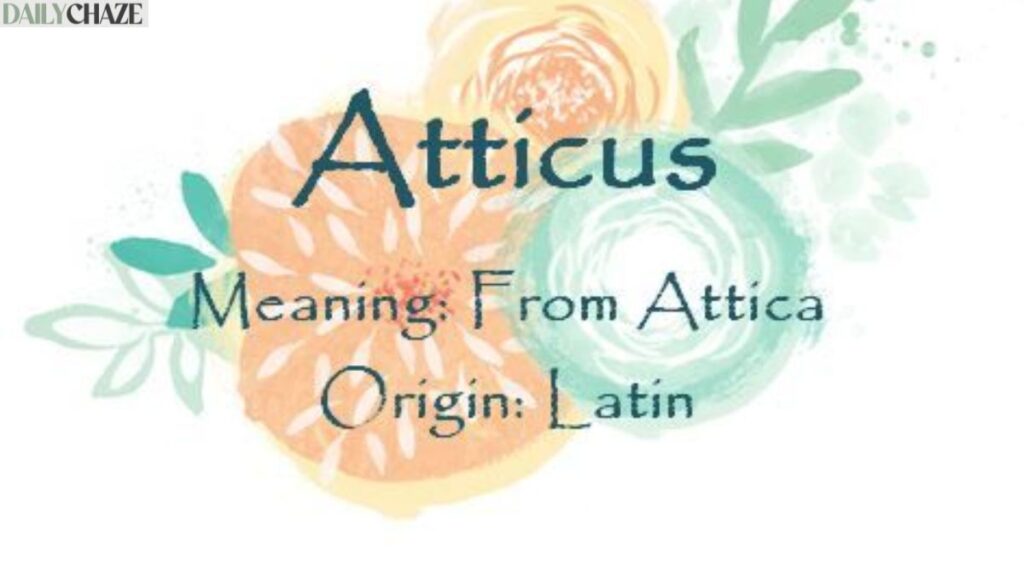
The name Atticus originates from Latin and Greek and means “man of Attica” or “from Athens.” Attica, the region around Athens, was known for its rich cultural, philosophical, and intellectual heritage. Because of this, the name carries connotations of wisdom, learning, refinement, and classical culture.
What does the name Atticus mean in Greek/Latin?
In Latin
In Latin, Atticus literally means “from Attica” or “man of Attica.” This region was a hub of culture and learning, which gives the name associations with intelligence, sophistication, and wisdom.
In Greek
In Greek, the name comes from the adjective Ἀττικός (Attikós), meaning:
- “Athenian”
- “Belonging to Attica”
- “Native of Athens”
Because Athens symbolized philosophy, art, and intellectual life, the name also conveys qualities like scholarship, refinement, and intelligence.
Is Atticus in the Bible the Same as Atticus Finch?
No, Atticus in the Bible and Atticus Finch are not the same. In fact, the Bible does not mention the name at all. Atticus Finch is a fictional character created by Harper Lee in her novel To Kill a Mockingbird (1960).
Must Read This Article……..birthday-wishes
H3 Clearing the confusion with To Kill a Mockingbird
Many people assume the name Atticus appears in the Bible because of the popularity of Atticus Finch. However, Finch is a literary creation, not a biblical figure. Harper Lee likely chose the name for its classical Greek/Latin roots, symbolizing wisdom, fairness, and moral integrity—qualities reflected in the character. The connection is purely cultural and literary, not scriptural.
Atticus in Historical and Religious Contexts
Although not biblical, the name Atticus played a role in the historical and religious world of early Christianity. It was a common name in Greek and Roman society, especially around Athens and Attica. The name reflects a backdrop of learning, civic prestige, and philosophical thought.
In early Christian history, several notable figures bore the name, including Atticus of Constantinople, a 5th-century archbishop known for his theological leadership and influence. References to the name in church documents and classical literature highlight how Greek culture shaped early Christian society.
Rare and Overlooked Names in the Bible
The Bible contains many well-known names, but it also includes rare and overlooked characters who appear briefly yet carry meaningful stories. Names like Ahithophel, Jael, Jabez, Othniel, Barzillai, Tirzah, or Onesiphorus reveal lessons of faith, courage, and God’s guidance.
Other rare names, such as Iscah, Shiphrah, Puah, Lemuel, and Gomer, are mentioned briefly but contribute to the richness of Scripture. Exploring these lesser-known names helps us appreciate the diversity and depth of biblical history, even if a name like Atticus is not included.
Key Takeaways About Atticus in the Bible
- Atticus is not a biblical name. It does not appear in the Old or New Testament.
- Meaning: The name is Greek/Latin in origin, meaning “man of Attica” or “Athenian.”
- Historical presence: Atticus appears in early Christian history, such as Atticus of Constantinople, a 5th-century archbishop.
- Literary influence: Its popularity today is more connected to Atticus Finch than to any biblical figure.
- Atticus is not a biblical name and does not appear in the Old or New Testament, nor in any major biblical manuscripts. The name has Greek and Latin origins, meaning “man of Attica” or “Athenian.” While it is absent from Scripture, it appears in early Christian history, most notably with Atticus of Constantinople, a 5th-century archbishop. Today, the name is more widely recognized through literature, especially Atticus Finch from To Kill a Mockingbird, rather than any biblical connection. Understanding its history clarifies that Atticus is primarily a historical and literary name, not a biblical one.
Frequently Asked Questions
Is the name Atticus found in the Bible?
No, the name Atticus does not appear in the Old or New Testament, nor in any major biblical manuscripts.
Does Atticus have a biblical meaning?
No, it does not have a biblical meaning. Its origins are Greek/Latin, meaning “man of Attica” or “Athenian.”
Was Atticus a Christian figure?
Yes, Atticus of Constantinople, a 5th-century archbishop, was an important early Christian leader, but he is not mentioned in the Bible.
Is Atticus Finch based on someone from the Bible?
No, Atticus Finch is a fictional character created by Harper Lee and inspired by classical Greek and Roman roots, not by Scripture.
Can Christians use the name Atticus today?
Yes, many Christians choose the name for its noble, scholarly, and historical associations, even though it is not biblical.
Conclusion
Although Atticus does not appear in the Bible, its Greek and Latin roots give it a rich historical and cultural background. The name means “man of Attica” or “Athenian,” connecting it to wisdom, learning, and classical culture. It also appears in early Christian history, notably with Atticus of Constantinople, a 5th-century archbishop. Today, its popularity is influenced more by literature, particularly Atticus Finch from To Kill a Mockingbird, than by any biblical reference. Understanding the name helps clear confusion: it is a historical, literary, and culturally significant name rather than a biblical one, making it meaningful for those who value knowledge, character, and tradition.

Hana is a writer and creator passionate about sharing blessings that nurture faith, gratitude, and inner peace. As the author of DailyChaze, she focuses on meaningful words that inspire positivity and emotional well-being in everyday life.